Shaved look or density: which SMP style suits you?
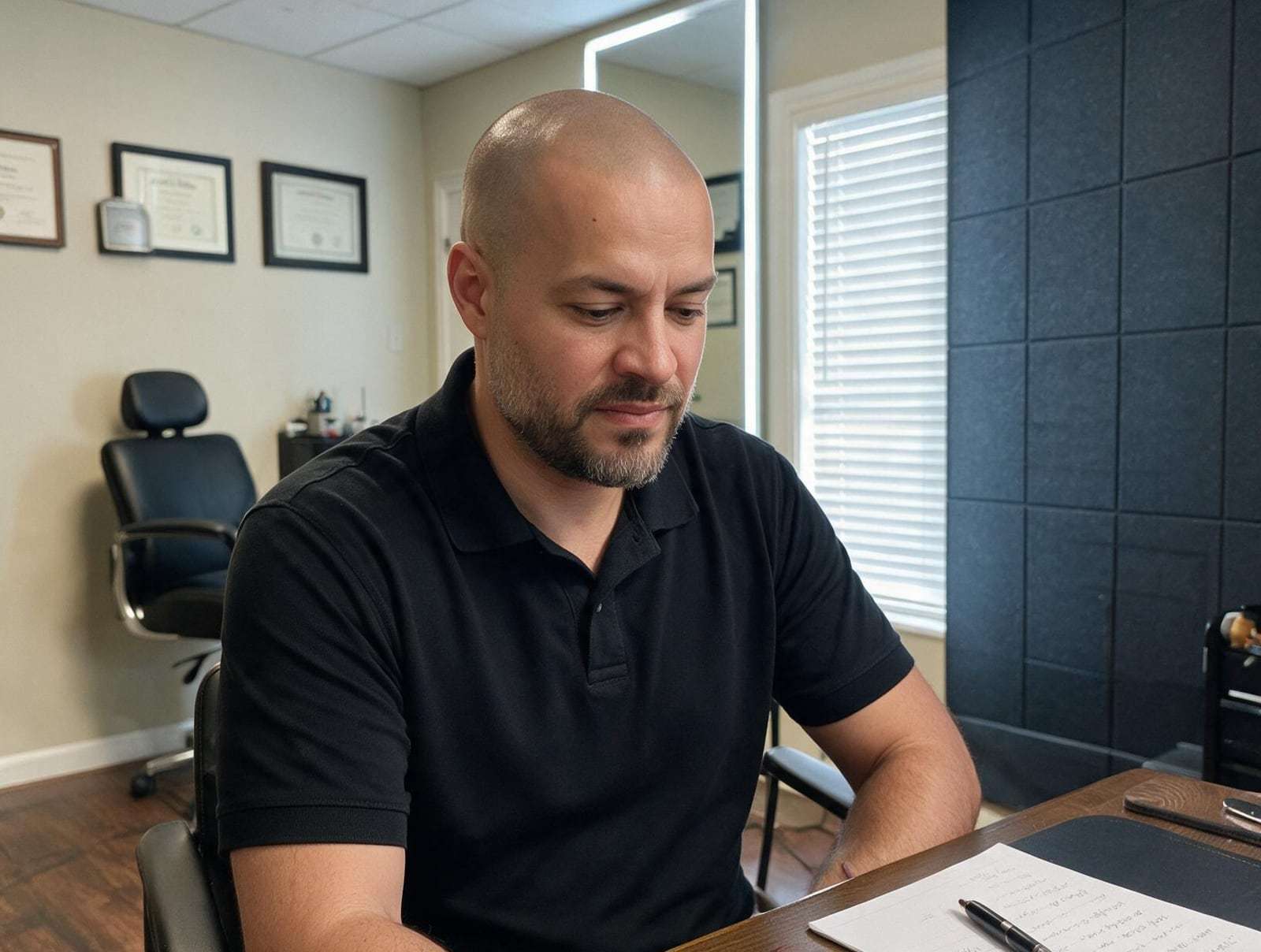
Shaved-look SMP creates the appearance of closely clipped follicles across a shaved or very short scalp. Density SMP places softer, carefully spaced pigment between existing hairs to reduce scalp show-through. The right choice between a shaved look and density SMP depends mainly on how much hair you retain, how you wear it and the finish you want.
How does shaved-look SMP work?
When I create a shaved-look treatment, my aim is to make the scalp look like it has been freshly clipped or shaved, not painted. I use tiny pigment deposits to imitate the visible cross-section of hair follicles. The dots are arranged to follow the natural direction, shape and density of the hair pattern.
This approach can suit someone with advanced hair loss who prefers a consistent, close-cut appearance. It can also work for a receding hairline, bald areas, some forms of alopecia and scalp scarring, provided the treatment plan is realistic for the skin and the pattern of hair loss.
The hairline needs particular care. I assess facial structure, age and the remaining hair pattern before we agree on its position. A hairline that is too straight, low or dark can make otherwise careful SMP look unnatural. I can create a range of hairline styles, from soft and mature to crisper and more youthful, depending on what suits you.
You can see more about this option on my shaved-head SMP style page. The goal is a believable follicle effect that still looks appropriate as your appearance changes over time.
How is density SMP different?
Density SMP is designed for a scalp where natural hair is still present. Rather than covering a fully bald area with a uniform follicle pattern, I place pigment between existing strands. This reduces the contrast between hair and scalp, so thinning areas can appear fuller without requiring you to shave your head.
It is often considered for a receding frontal area, diffuse thinning, a widening part or thinning after a hair transplant. The pigment color is selected to work with your current follicle or hair color. That matters particularly when hair is light, mixed or gray, because a single overly dark tone can be more noticeable than the original scalp show-through.
Density work has to be restrained. The normal result is still some visible scalp between hairs, because the treatment is creating the impression of greater coverage rather than replacing every strand. I build the appearance gradually and consider how the pigment will sit under different lighting and alongside hair that may continue to change.
If you are keeping your existing hair, grooming also forms part of the plan. A short, tidy clipper length often helps the natural hair and pigment blend together. I discuss the practical length that makes sense for your pattern, lifestyle and preferred style during consultation.
Which option looks more natural?
Neither approach is automatically more natural. Naturalness comes from matching the treatment to the way you actually wear your hair. A shaved-look design can look convincing when the scalp is kept very short. Density SMP can look convincing when the remaining hair provides the surrounding texture and the pigment is subtle enough to sit behind it.
For that reason, I encourage prospective clients to study healed examples of the practitioner’s hairline work, not only freshly completed photographs. Look at how the front edge transitions into the temples, how the dots sit at close range and whether the result still appears soft in ordinary light.
My training includes three SMP certifications, including two master certifications, and certification in blood-borne pathogens. I am also licensed as a body art practitioner, trained in human anatomy and physiology, and work as a barber. Those areas of experience help me consider both the scalp and the haircut when planning a result.
SMP is a visual camouflage treatment. It does not grow hair, alter natural hair growth or treat the cause of hair loss. If your hair loss is sudden, active or not yet explained, speak with an appropriate healthcare professional before proceeding. For suspected female pattern hair loss, other medical, metabolic and hormonal causes should be considered before treatment.
What happens before and during treatment?
We begin by discussing your hair loss pattern, medical history, allergies, preferred hair length and expectations. I assess the scalp, consider the contrast between your hair and skin, and decide whether a shaved-look or density approach better fits the outcome you want.
Before treatment, the scalp should be clean. I mark the treatment areas and agree the hairline and overall shape with you before pigment is applied. Numbing cream is not typically used because, depending on skin type and reaction, it may affect pigment retention. If needed, it can be applied one hour before the session.
Most treatments are completed over two to four sessions, usually spaced a few weeks apart. The exact plan varies according to the area, skin, hair pattern and the amount of work required. I would rather build a controlled result than rush to create heavy saturation in one appointment.
At consultation, I also discuss patch testing where appropriate and ask you to disclose allergies. Anyone with active eczema or psoriasis, a history of keloid scarring or another scalp concern should obtain suitable professional advice before booking.
How should I care for the scalp afterwards?
After each session, follow the specific instructions I provide and avoid picking or disturbing the treated area. General informational guidance includes keeping the scalp dry initially, avoiding shampoo, sweating, heavy exercise, steam rooms and hot showers during the early healing period. A shower cap can help when bathing.
As healing progresses, gentle washing can usually resume according to the aftercare plan. Avoid direct sun exposure for the first several days, then protect the scalp with broad-spectrum sunscreen long term. Sun exposure and natural skin renewal can gradually lighten pigment.
It is normal for the color to look stronger at first and soften as the scalp heals. SMP typically holds well for one to three years before a top-up is recommended, although skin type, sun exposure, lifestyle and the treatment area affect how it ages.
My clinic is in Wilmington, Massachusetts, and I serve the Boston area. You can also review the scalp micropigmentation client examples and testimonials page when researching your options, then compare the style of work with the result you want.
If you are deciding between SMP shaved versus density, the simplest question is whether you want to maintain visible hair or deliberately wear a close-shaved style. Bring photographs of the look you prefer, and I can explain what is realistic for your scalp.
If you would like to talk it through, you are welcome to book a consultation with me.
Frequently asked questions
Can I change from density SMP to a shaved look later?
Sometimes. If you later decide to shave your head, existing density work may need to be assessed for spacing, color and coverage. The result can depend on how much natural hair remains and how the pigment has healed. I would review the scalp in person before recommending any additional treatment.
Can shaved-look SMP be used if I have some hair left?
Yes, but the styling plan matters. Some clients keep remaining hair very short so it blends with the follicle effect, while others may need a different density strategy. I assess the contrast between your natural hair and scalp, then explain whether a shaved appearance or blended density is more realistic.
Will density SMP stop my hair from thinning further?
No. SMP does not change the hair follicles or stop the process causing hair loss. It reduces visible scalp show-through at the time of treatment. If your hair is actively changing, I will discuss how that may affect the design and why future adjustments or a different style may eventually be needed.
Is the shaved look completely bald?
Not necessarily. The treatment is intended to resemble closely clipped or freshly shaved follicles, rather than a solid bald scalp. The amount of natural hair, your chosen grooming method and the hairline design all affect the finished impression. A consultation helps establish how close or soft you want the look to be.
Can SMP cover a hair transplant scar?
SMP can be used to camouflage some scalp scars, including scars associated with hair restoration, but suitability depends on the scar’s condition, texture and color. Scar tissue may retain pigment differently from normal scalp skin. I assess the area carefully and set expectations before deciding whether treatment is appropriate.
What if my hair is gray or salt and pepper?
Gray or salt-and-pepper hair needs careful color planning. The aim is to complement the overall mixture of light and dark hair, not match one strand with a dark pigment. Density SMP may be suitable, but the spacing and tone must remain subtle enough to blend as your natural hair changes.
Can SMP be removed if I change my mind?
SMP is intended as a lasting cosmetic treatment, although it gradually fades and may need a top-up. Laser removal can remove SMP, but removal is not a simple reversal and may require assessment by an experienced professional. This is one reason I recommend taking time over the hairline and style decision.