How do I get ready for my first SMP session?
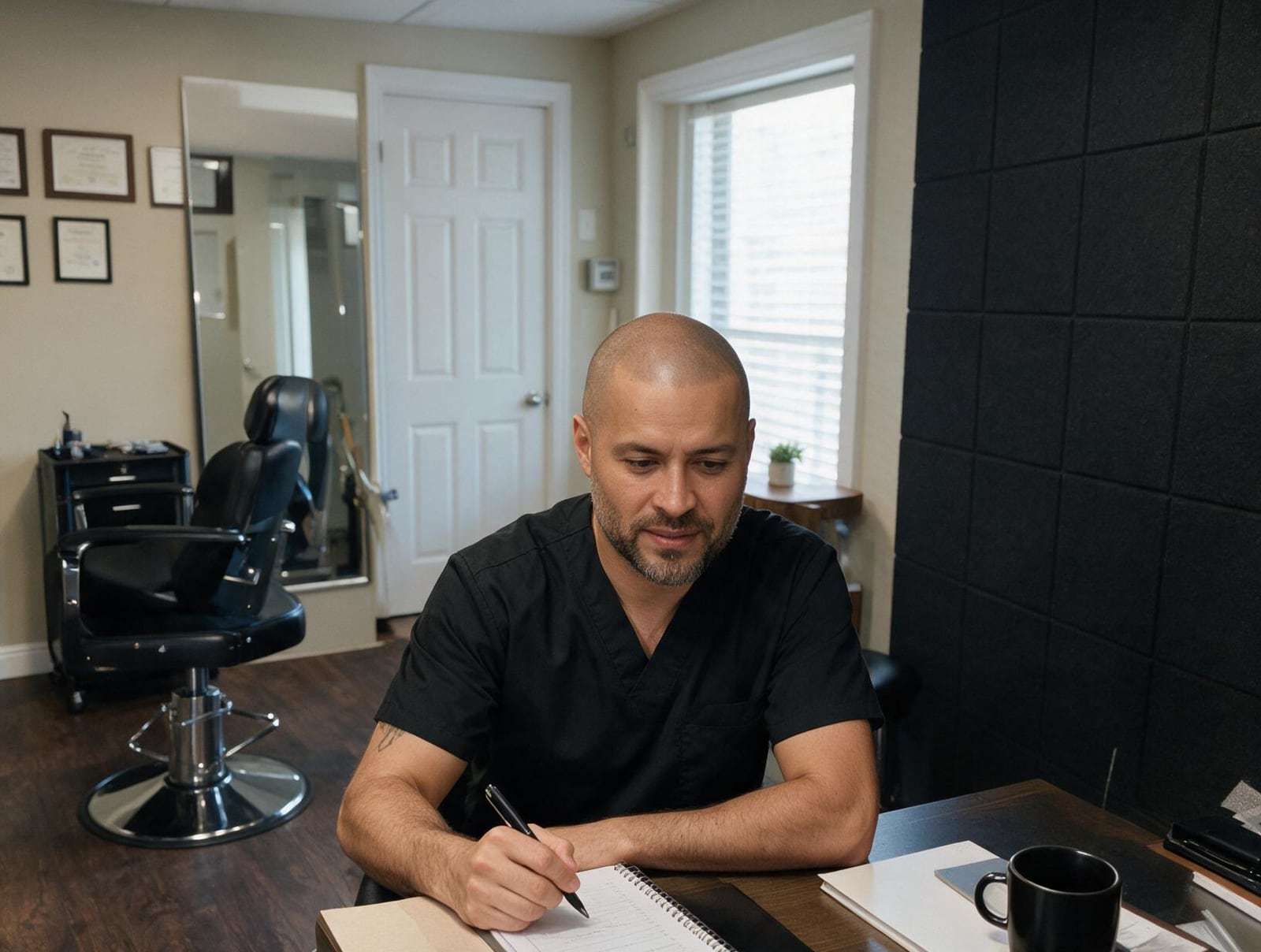
To prepare for your first SMP session, wash your scalp, arrive rested, hydrated, and fed, and avoid changing your usual hair length beforehand. Bring reference photos, disclose allergies and skin conditions, and discuss your preferred hairline, pigment shade, numbing options, and aftercare plan during your consultation.
What should I do before my SMP appointment?
I recommend washing your hair and scalp before you arrive, so the treatment area is clean and free from excess oil or styling products. Do not apply heavy products immediately beforehand unless I have given you different instructions.
Try to arrive well-rested, hydrated, and having eaten a proper meal. Fatigue, dehydration, and low blood sugar can make any treatment feel more difficult. Wear comfortable clothing that does not need to be pulled over your head, particularly if we are treating a larger area.
Keep your scalp in its usual condition before the appointment. If you normally wear a short clipper cut, that is useful information. Avoid shaving completely down or growing your hair out significantly just to prepare, because I need to see your natural baseline and how your existing hair blends with the scalp.
If you have a particular style in mind, bring a few reference photographs. They can help us discuss whether you prefer a soft, mature hairline or a sharper, more defined appearance. A photograph is a starting point, not a promise that the same design will suit your facial structure or age.
What should I tell my practitioner before treatment?
At consultation, tell me about allergies, previous reactions to pigments or tattoos, scalp conditions, medications, and any relevant health history. Active eczema, psoriasis, acne, or another irritated scalp should be discussed before proceeding. Anyone with a history of keloid scarring should speak with a dermatologist before booking.
SMP is a cosmetic camouflage treatment. It can reduce the contrast between your scalp and existing hair, but it does not grow hair, alter natural hair growth, or treat the cause of hair loss. That distinction matters when we discuss the result you want.
For diffuse hair loss in women, I would also encourage appropriate medical assessment to rule out other conditions, metabolic issues, or hormone imbalances that can cause similar changes. SMP should complement informed care, not replace an evaluation of unexplained hair loss.
You should also mention your lifestyle. Frequent sun exposure, regular exercise, sweating, and scalp products can affect how you care for the area and how pigment ages. This information helps me give you practical, individual guidance rather than a generic plan.
What happens during the first session?
Before placing pigment, I assess the scalp and treatment area with you. We discuss the hairline, taking facial structure and age into account, especially when someone is fully bald. I then mark the proposed areas so you can see and approve the design before treatment begins.
We also discuss pigment selection. The shade is chosen to match your current hair follicle or stubble color, with attention to how it should look once healed rather than simply how it appears in a container. This conversation is especially important for men who keep a shaved style, but it also matters when adding density between existing hairs.
At Supreme SMP, numbing cream is not typically used because it can affect pigment retention depending on skin type and reaction. If it is needed, it is available and applied one hour before the session. Please raise comfort concerns early so we can decide on the most appropriate approach.
The treatment uses small deposits of pigment to create the appearance of follicles or reduce visible scalp show-through. A complete plan commonly involves two to four sessions spaced a few weeks apart. Building the result gradually allows us to assess healing and add density carefully rather than trying to create the finished appearance in one visit.
When researching SMP, many men focus on the final shaved look, but the hairline deserves particular attention. A natural hairline is not a rigid, identical row of dots. I assess its softness, shape, density, and relationship to your existing hair so the result remains believable as it settles.
How should I choose an SMP practitioner?
Look closely at the practitioner’s healed work, not only fresh photographs taken immediately after treatment. Healed examples show how the color, spacing, hairline, and density settle over time. It is also reasonable to ask how the practitioner handles different skin types, scars, alopecia, and existing hair.
At Supreme SMP, I am a licensed body art practitioner with three SMP certifications, including fundamentals and two master certifications, as well as blood-borne pathogens certification. My background includes human anatomy and physiology, visual communications, and barbering. I bring those skills together when planning a result that needs to look natural from more than one angle.
You can read more about the scalp micropigmentation service before your appointment, including the types of concerns it may help camouflage. My practice is in Wilmington, and the Boston SMP page shares client testimonials.
What do I need to plan for after the session?
Plan for a quiet few days after treatment. Keep the scalp dry, using a shower cap when bathing, and avoid washing, shaving, heavy exercise, steam rooms, and hot showers that make you sweat during the early healing period. Avoid direct sun exposure on the scalp for several days.
Healing guidance can vary with the treatment area and your skin, so follow the instructions I give you rather than adding products or changing the routine yourself. Some darkening, lightening, or light flaking can occur as the skin heals. Do not pick or scratch the area.
After the initial healing period, gentle washing can resume as advised, and broad-spectrum sunscreen is important for protecting the pigment over the long term. SMP typically holds well for one to three years before a top-up is recommended, although skin, lifestyle, sun exposure, and the treated area all influence longevity.
For a fuller overview, read my guide to SMP aftercare instructions. If you notice unusual warmth, swelling, redness, discomfort, or another concern beyond what we discussed, contact me promptly.
If you are unsure whether SMP suits you, you are welcome to book a consultation to talk it through.
Frequently asked questions
Can I work on the day of my first SMP session?
That depends on your job and the size of the area being treated. Desk work may be manageable, but a physically demanding or outdoor role can expose the scalp to sweat, dust, heat, or sun. I generally suggest leaving enough time afterward to follow the early aftercare instructions comfortably.
Should I stop hair-loss medication before SMP?
Do not stop prescribed medication without speaking with the clinician who manages it. Bring a complete list of medications and supplements to your consultation. Your practitioner can explain whether anything affects treatment planning, bleeding, healing, or the appearance of existing hair, and can advise when medical input is needed.
Can SMP be performed over a scalp scar?
SMP may be used to camouflage certain scalp scars, including some transplant or trauma scars, but suitability depends on the scar’s maturity, texture, color, and condition. Raised, changing, irritated, or recently healed scars need assessment first. Bring details of the original injury or procedure to your consultation.
Will I need to shave my head for SMP?
Not always. SMP can be placed between existing hairs to reduce scalp show-through and create the appearance of density. Some clients keep fine stubble, while people with more advanced hair loss may prefer a fully shaved look. We can discuss the hairstyle you realistically plan to maintain.
Can SMP be removed if I change my mind?
SMP is intended to be a lasting cosmetic treatment, but laser removal may be possible. Removal is not necessarily simple, and the outcome can depend on pigment, placement, skin, and the original application. That is why I recommend a conservative hairline discussion and thorough consultation before treatment.