
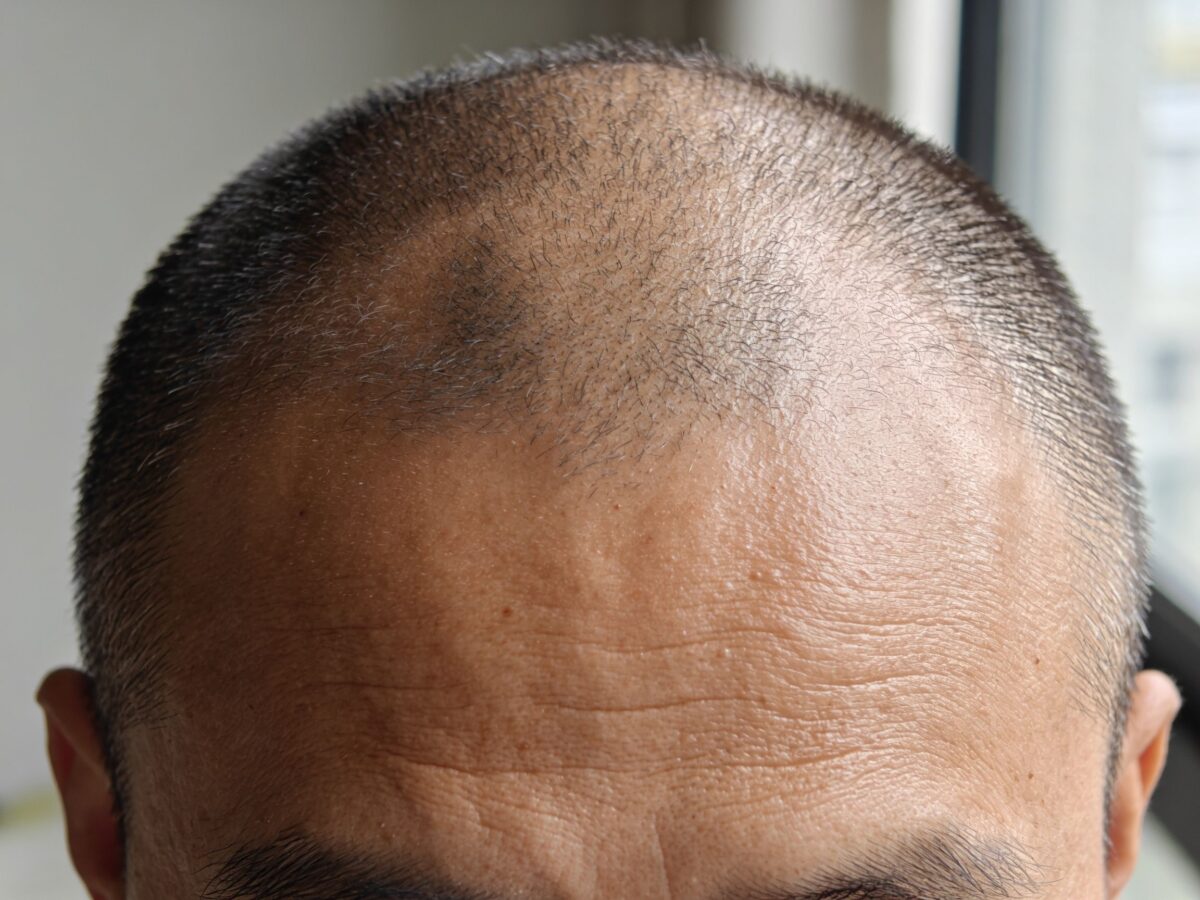

Wondering why your scalp looks darker than expected right after your SMP session, or whether that’s normal? It isn’t a mistake, and it isn’t permanent. This article walks through exactly what happens to the pigment day by day, and the specific aftercare steps that protect how well it holds.
Shaved SMP healing follows a predictable pattern: darker and more defined for the first four to seven days, visibly softer by day ten, and settled into its true tone by day 28 to 30. Every stage matters, because what you do to your scalp during this month has a direct bearing on how the pigment sits in the skin for years afterwards. Get the aftercare wrong in week one and you can undo work that took hours to build.
Days one to four: why the pigment looks darker than you imagined
Straight after your session, and for the first three to four days, your scalp will look considerably darker and sharper than the finished result you’re expecting. This is normal. The needle deposits pigment at the epidermal to upper dermal junction, roughly 1.5 to 2 millimetres deep, and the surface skin is inflamed and slightly swollen around each dot. That swelling exaggerates the tone.
During this window: no water on the scalp at all, no shampoo, no sweating and no shaving. Treat your scalp like a fresh wound, because that’s exactly what it is. Sleeping on a clean pillowcase and avoiding tight hats reduces friction against the treated area. Most clients find the scalp feels tight or mildly tender, similar to sunburn, which settles within 48 to 72 hours.
Days four to ten: the fading phase that worries people unnecessarily
This is the stage that catches most people off guard. Between days four and seven, the top layer of skin, the stratum corneum, begins to shed as part of normal epidermal turnover. Superficial pigment sitting in that layer sheds with it, and the scalp can look patchy, lighter, or even as though the treatment “didn’t take” in places.
It has taken. What you’re losing is epidermal pigment, which clears within roughly 27 days regardless of what you do. The pigment that stays, the pigment that matters, sits deeper in the dermis. From day five you can begin gentle washing with a fragrance-free cleanser, using your palm rather than nails or a flannel. Sun exposure still needs to be avoided completely at this stage, since UV exposure on healing skin accelerates fading and can cause uneven tone. Moisturising isn’t recommended in the first ten days for most skin types; the scalp needs to breathe and heal, and adding product too early can interfere with how the pigment settles.
Two to four weeks: when the true tone reveals itself
By day ten, redness and tenderness should be fully gone, and this is when SPF becomes non-negotiable, even on a shaved head under a hat brim. Between weeks two and four, the scalp completes its healing beneath the surface, and the pigment gradually deepens and evens out into what will become its long-term tone. It’s noticeably softer and more natural looking than the sharp, dark result you saw in the first week.
Full healing takes 28 to 30 days, and that’s true after every session, not just your last one. Swimming pools, saunas and hot tubs should be avoided for a full 28 days, since chlorinated or bacteria-heavy water increases infection risk and can pull pigment prematurely. Most SMP treatments run over two to four sessions spaced a few weeks apart, so you’ll likely cycle through this exact healing sequence more than once before the final result is complete. Each session builds density, typically progressing from around 40 dots per square centimetre in early sessions up to 80 to 100 dots per square centimetre by the final one, which is why patience between sessions actually improves the outcome rather than slowing it down.
The aftercare habits that decide how long your SMP lasts
Four things influence pigment retention more than anything else: sun exposure, sweat, washing technique and moisture. Daily SPF 30 to 50 on the scalp from day ten onward is the single biggest factor in how long your result holds its depth, since UV breaks down pigment particles over time. Heavy sweating during the healing month should be avoided, so hold off on intense workouts, saunas and anything that causes prolonged sweat to sit on the scalp.
Once you’re past the 28-day mark, a light, unscented moisturiser a few times a week keeps the scalp from drying out, which helps the pigment read as a natural, matte tone rather than shiny or patchy. Shaving can resume once healing is complete, using a fresh blade and avoiding pressure directly over the treated area for the first few passes. With consistent aftercare, most people see SMP hold well for one to three years before a top-up session is worth considering, and that top-up is typically quick since the groundwork is already in place.
Scarring alopecia and areas with previous scar tissue can fade slightly faster than standard hair loss cases, simply because scar tissue behaves differently under the skin. If that applies to you, mentioning it before your first session means the pigment approach and touch-up schedule can be planned around it from the start.
Frequently Asked Questions
How long does SMP take to fully heal after each session?
Full healing takes 28 to 30 days after each SMP session. The scalp looks darker for the first four to seven days, fades and can appear patchy between days four and ten as the epidermis sheds, then settles into its true, even tone by around day 28.
Why does my scalp look patchy about a week after SMP?
Patchiness between days four and ten is normal and expected. It’s caused by the shedding of superficial epidermal pigment as the top skin layer naturally turns over. The deeper dermal pigment that determines your long-term result stays intact underneath.
Can I wash a shaved head normally straight after SMP?
No. For the first four days, avoid all water on the scalp, including shampoo. From day five, gentle washing with a fragrance-free cleanser using your palm is fine. Normal washing and grooming can resume once healing completes at around day 28 to 30.
Does sun exposure affect how long SMP lasts?
Yes, significantly. UV exposure breaks down pigment particles in the dermis over time and can cause uneven fading. SPF 30 to 50 applied daily from day ten onward, once the scalp has healed enough to tolerate product, is one of the most effective ways to protect the result long term.
How often will I need a touch-up after SMP on a shaved head?
Most people find SMP holds well for one to three years before a top-up is worth considering, depending on skin type, sun exposure and aftercare consistency. Touch-ups are typically quicker than the original sessions since the underlying pigment framework is already established.
Ready to talk it through?
Supreme SMP in Wilmington offers a personal consultation to answer your questions and recommend the right approach for you. Get in touch with Supreme SMP to book your consultation.