When can you have SMP after a hair transplant?
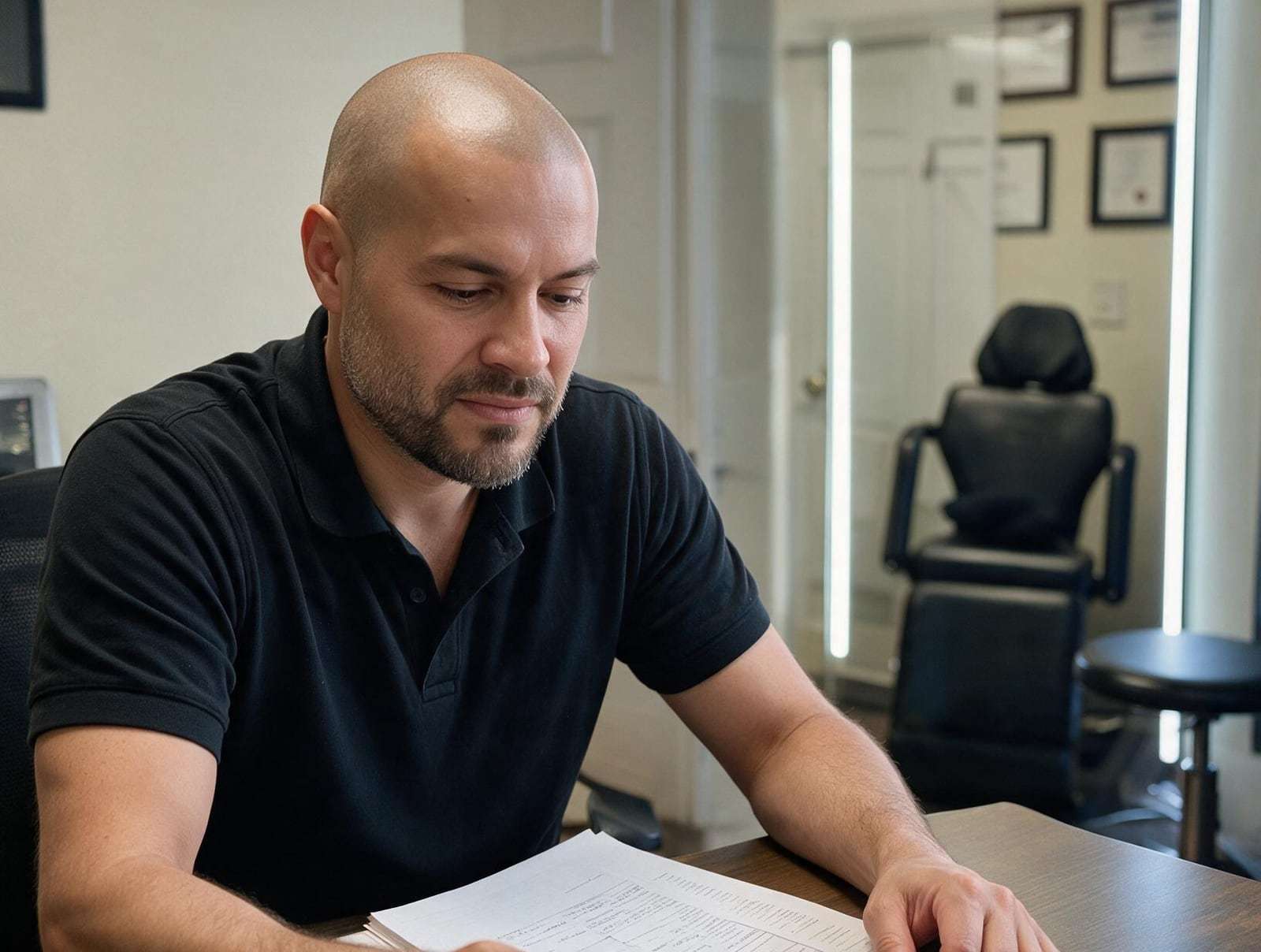
I generally recommend waiting until your scalp and transplant scars have fully healed before having SMP. For many people, that means discussing treatment once the scalp has settled and the transplant result is becoming clear, which your surgeon and I assess individually., but the right timing depends on healing, graft growth, scar condition, and your transplant surgeon’s advice. A consultation is essential.
Why should you wait before having SMP after a transplant?
A hair transplant changes the scalp in two ways. Grafts are placed into the recipient area, while the donor area may have small FUE marks or a linear FUT scar. Both areas need time to settle before I assess them for scalp micropigmentation.
Early after surgery, the skin can be red, tender, flaky, swollen, or uneven. The transplanted hairs may also shed before regrowth begins. If I treat too soon, I may be working with a scalp that has not reached its stable appearance. That makes it harder to judge the true level of thinning, the final hairline, and the way a scar is holding pigment.
For that reason, I do not use a fixed appointment date for everyone. I want the surgical sites to be closed and calm, with no active irritation, scabbing, infection, or unresolved healing concern. If you are still receiving follow-up care from your transplant surgeon, I also want you to discuss SMP with them before proceeding.
For general information about the treatment itself, you can read my scalp micropigmentation service guide.
Is there a fixed waiting time after a transplant?
No. The right timing is a planning decision made at consultation, not a fixed rule. Someone seeking pigment between transplanted hairs may need a different plan from someone wanting camouflage over an FUE donor area or an FUT strip scar. The condition of the skin matters more than the calendar alone.
A transplant’s meaningful hair growth commonly becomes clearer several months after surgery, while the result is often assessed more fully at about twelve months. If your transplant is still changing, the density you see today may not be the density you will have later. I would rather wait and design around the stable result than create a pattern that later looks too dark, too dense, or poorly balanced.
Your surgeon may also recommend a different timeframe based on the procedure, medications, healing history, or any complications. Their advice takes priority for the surgical side of your recovery. My role is to evaluate whether the scalp is suitable for cosmetic tattooing and whether SMP will support your eventual appearance.
What can SMP do after FUE or FUT?
SMP after FUE can reduce the contrast of small extraction marks in the donor area, particularly when you wear your hair very short. SMP after FUT may help camouflage a linear strip scar, although scar tissue can accept pigment differently from normal scalp skin.
I can also use SMP between existing and transplanted hairs to reduce visible scalp show-through. This is sometimes called a density treatment. It does not grow hair, alter the transplanted follicles, or make the transplant produce more grafts. It creates the visual impression of fuller coverage by placing carefully matched follicle impressions on the scalp.
The most natural plan depends on how you wear your hair. If you keep remaining hair very short, the pigment must blend with fine stubble. If you shave completely, the hairline and follicle pattern become especially important. I pay close attention to the hairline because an overly straight, low, or dark design can look unnatural even when the rest of the work is well placed.
For clients with longer hair, density work must be subtle. Some scalp showing through is normal. SMP should not look like a solid layer of paint on the scalp. At consultation, I explain what level of visual coverage is realistic for your hair, skin, scar tissue, and chosen hairstyle.
What happens at an SMP consultation after a transplant?
I begin by reviewing your transplant history, including whether you had FUE or FUT, when the procedure took place, where grafts were placed, and whether you have experienced unusual healing. I also ask about scalp conditions, allergies, medication, and any previous reactions to pigments or tattooing.
Then I examine the recipient and donor areas in person. I look for redness, raised or irregular scars, active flaking, changes in skin texture, and the way your natural hair and transplanted hair are growing. Scar tissue may require a more cautious approach because it can take pigment unevenly and may need refinement after the first session.
We discuss whether your priority is donor scar camouflage, recipient-area density, a softer hairline, or a combination. I match the pigment to your current follicle color rather than choosing a generic black shade. I also mark the proposed treatment areas and agree the hairline before beginning. Numbing is not typically used, but it is available if needed and applied an hour before the session.
Most treatments are completed over two to four sessions, usually spaced a few weeks apart. Building the result gradually lets me assess how your skin has healed and how the pigment settles before adding further density. This is particularly important when treating scars or placing pigment among existing hair.
How should I care for the scalp after SMP?
After each SMP session, follow the aftercare instructions I provide rather than treating the area like a healed tattoo. The practical aim is to protect the pigment while the skin settles. My SMP aftercare instructions explain the process in more detail.
- Keep the scalp dry and avoid washing, shampoo, sweating, and shaving as I instruct.
- Avoid heavy exercise, steam rooms, hot showers, swimming, and direct sun while the area is healing.
- Do not pick scabs or interfere with flaking. Temporary darkening followed by lightening can be a normal part of healing.
- Once healed, use broad-spectrum sunscreen on the scalp and return to normal grooming as advised.
Because you have already had a transplant, contact your transplant surgeon or SMP practitioner if you notice unusual warmth, increasing redness, significant swelling, unusual discomfort, or another concern that was not discussed beforehand. SMP is cosmetic camouflage, not treatment for an underlying hair-loss condition.
How do I know whether I am ready?
You may be ready to discuss SMP when your scalp is fully healed, your transplant outcome is becoming clear, and your surgeon has no unresolved concerns. You should also be comfortable with the intended outcome. SMP can make a transplant look denser or disguise scarring, but it cannot replace missing follicles or guarantee a particular hairline.
When choosing a practitioner, review real examples of healed hairline, density, and scar work. Ask how the artist approaches pigment color, scar tissue, session spacing, and aftercare. At Supreme SMP in Wilmington, Massachusetts, I serve the Boston area and assess each post-transplant scalp individually. I am a licensed body art practitioner with three scalp micropigmentation certifications and a blood-borne pathogens certification.
If you are unsure whether your scalp has settled enough, you are welcome to book a consultation and we can talk it through.
Frequently asked questions
Can SMP damage transplanted hair follicles?
SMP does not make transplanted follicles grow, and it is a cosmetic treatment that does not change natural hair growth. However, recently operated skin needs time to heal, so treatment should not be rushed. Your transplant surgeon should review your recovery first, particularly if you have had irritation, infection, delayed healing, or another complication.
Can I have SMP if my transplant result is still improving?
It may be possible, but I usually prefer to understand the direction of your growth before adding density pigment. Transplanted hair can continue changing for many months. Treating while the result is still developing may make the final pattern look uneven or overly dense, so timing should be decided after an individual scalp assessment.
Is SMP suitable for an FUT scar?
SMP can camouflage a linear FUT scar, but scar tissue does not always accept pigment like normal scalp skin. The scar’s width, texture, color, and maturity all matter. Some clients need a gradual approach and refinement sessions. I assess the scar in person and explain what level of blending is realistic before treatment.
Can SMP hide FUE dots if I keep my hair longer?
SMP is often most useful for FUE marks when the hair is clipped short or shaved, because the pigment is designed to resemble follicles and reduce contrast with the scalp. Longer hair may conceal some marks naturally. Your result depends on the spacing, visibility, color, and texture of the extraction sites.
Will SMP after a transplant look like a second hair transplant?
No. SMP does not add hair or create new follicles. It places tiny pigment impressions in the scalp to reduce visible contrast and suggest greater density. The effect is cosmetic rather than biological. You should still expect some scalp to show through, especially in bright light or when the hair is parted.
Can SMP be removed if I change my mind?
Scalp micropigmentation can be removed with laser treatment, although removal is more complicated when pigment has been placed too deeply or has spread. That is one reason I recommend careful planning, conservative pigment placement, and a clearly agreed hairline. Reviewing healed work and discussing future options before treatment is important.